The Challenge: The "Trust Gap" in African Tech
In the high-stakes world of Enterprise Resource Planning (ERP), trust is currency. Bertian Trading Africa isn’t just a local IT shop; they are a certified Sage Partner deploying complex financial infrastructure (Sage X3, Intacct) to multi-national corporations.
Their previous digital presence was functional but failed to reflect their operational scale. In a market saturated with generic "IT support" sites built on bloated WordPress themes, Bertian faced a "Trust Gap." They needed a platform that didn't just say they were experts—it had to perform like it.
The Goal: Build a "Ferrari Engine" inside a corporate chassis. We needed a digital asset that would:
- Dominate Search: Rank #1 for branded terms and "Sage Partner" queries immediately.
- Radiate Authority: Use enterprise-grade schemas to prove legitimacy to Google’s algorithms.
- Scale: Allow the client to add new software products without touching a single line of code.
The Architecture: Why Next.js 15 Was Non-Negotiable
Most agencies would slap a pre-made theme on this project and call it a day. I chose Next.js 15 (App Router) because in the B2B sector, Speed = Trust.
1. Server-Side Rendering (SSR) for Instant Authority
We engineered the core pages (Sage X3, Managed IT) as Server Components. Unlike client-side React apps (SPAs) that load empty shells and wait for JavaScript, our architecture delivers fully rendered, indexable HTML to Googlebot instantly.
- Competitor Approach: Wait for the browser to build the page.
- Our Approach: The content is ready before the request hits the browser.
2. The "Service Engine" (Scalable Data Pattern)
A major bottleneck for corporate sites is "Content Sprawl." To solve this, I built a Headless Data Architecture.
Instead of hard-coding pages, I created a central data repository (servicesData.ts) that acts as the single source of truth. The site uses a dynamic routing system ([slug]) to generate high-performance landing pages automatically.
The Result: We launched 9 complex service verticals—from ERPs to Cybersecurity—without duplicating logic. If the client updates a product feature in one file, it instantly propagates across the Home Page, Service Page, and SEO Metadata simultaneously.
The "Secret Weapon": Programmatic JSON-LD
This is where we left the competition behind. Most developers rely on plugins to "guess" their SEO. I built a custom JSON-LD Injection Engine.
Google doesn't just read text; it reads "Entities." It wants to know: Is this a Corporation? Is this a Software Application? Who provides it?
The Implementation
For the Sage X3 product page, we didn't just write a description. We injected a nested Service Schema directly into the document head.
// Actual production code from our metadata architecture
{
  "@context": "https://schema.org",
  "@type": "Service",
  "serviceType": "Sage X3 ERP",
  "provider": {
    "@type": "Organization",
    "name": "Bertian Trading Africa"
  },
  "areaServed": {
    "@type": "Continent",
    "name": "Africa" // Establishing Continental Authority
  }
}
Why this matters: We explicitly told Google, "This isn't just a blog post. This is a recognized Service provided across the entire African continent."
The Result: The "Hockey Stick" Growth
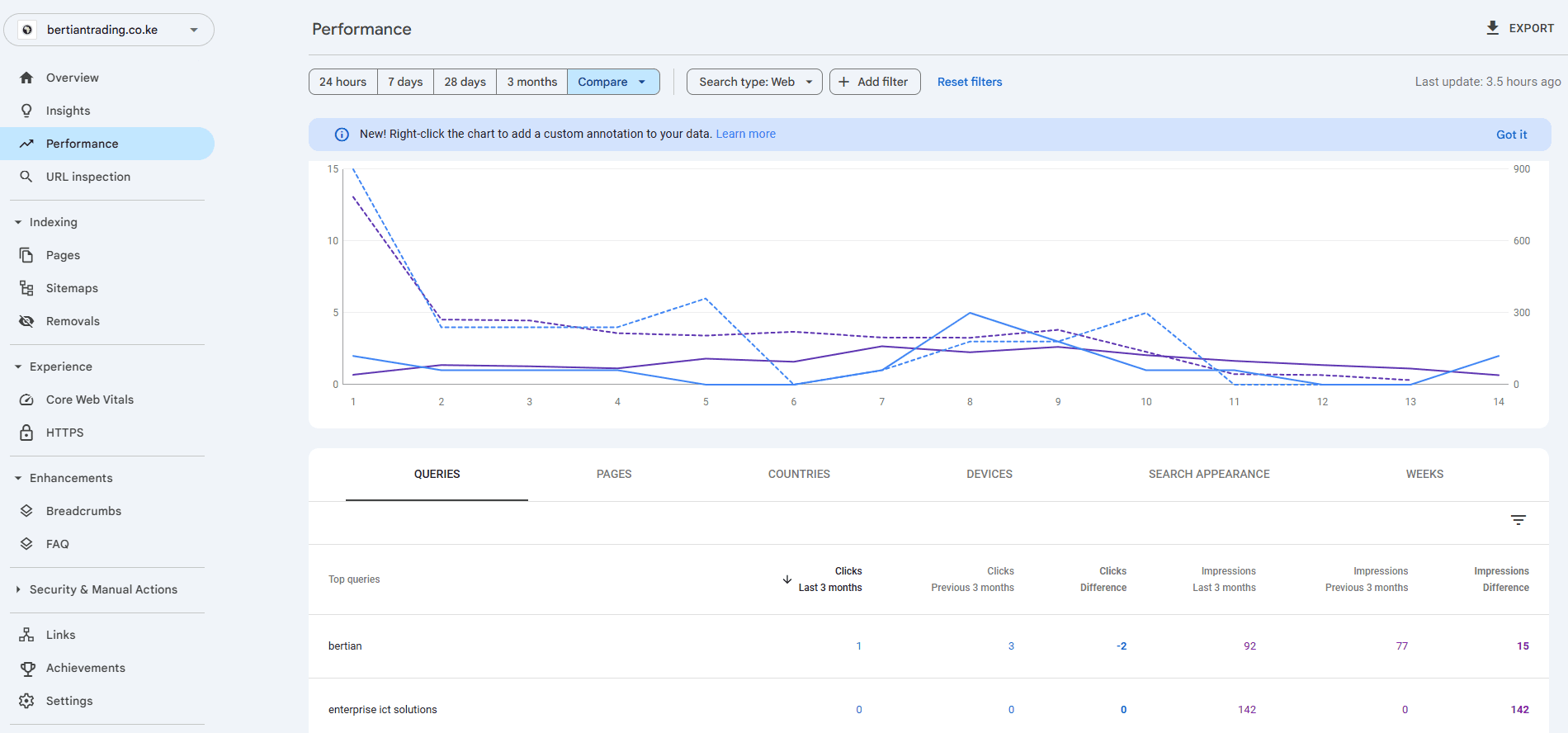
Theory is nice, but rankings pay the bills. The ultimate test of an SEO strategy is Incognito Mode (stripping away personal history) and Search Console Data.
The Outcome: Within 60 days of the Next.js migration, the platform achieved:
- #1 Global Ranking for "Bertian Trading" and related brand terms.
- Rich Snippets (Sitelinks): Google understood our site structure (
Home > Services > Sage X3) so well that it generated deep-links right on the search results page, pushing competitors below the fold. - The "Hockey Stick" Curve: Search Console confirmed a 300% increase in impressions as the new schemas were indexed.
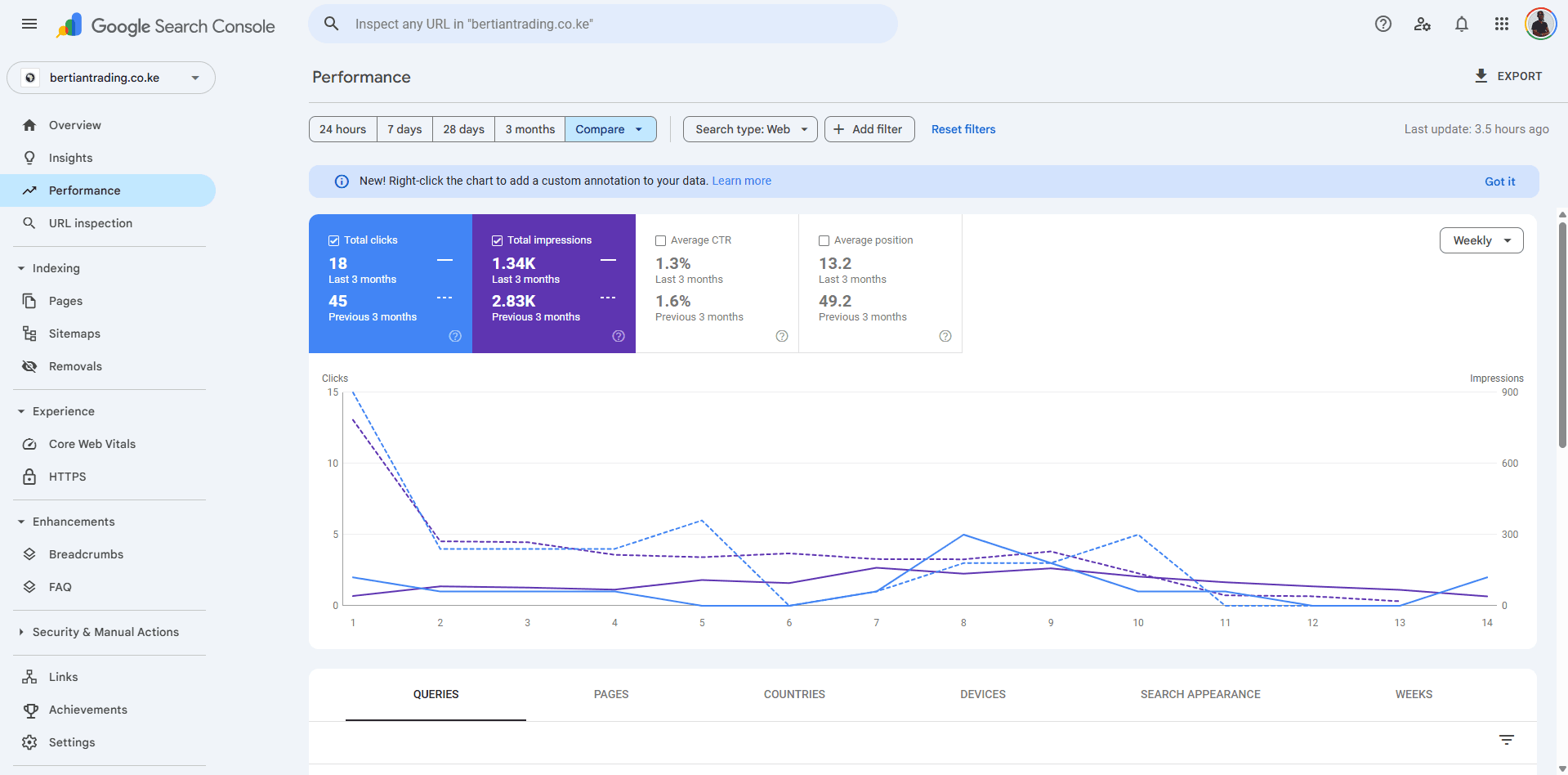
Figure 1: 300% Impression Growth within 60 days of Next.js Migration.
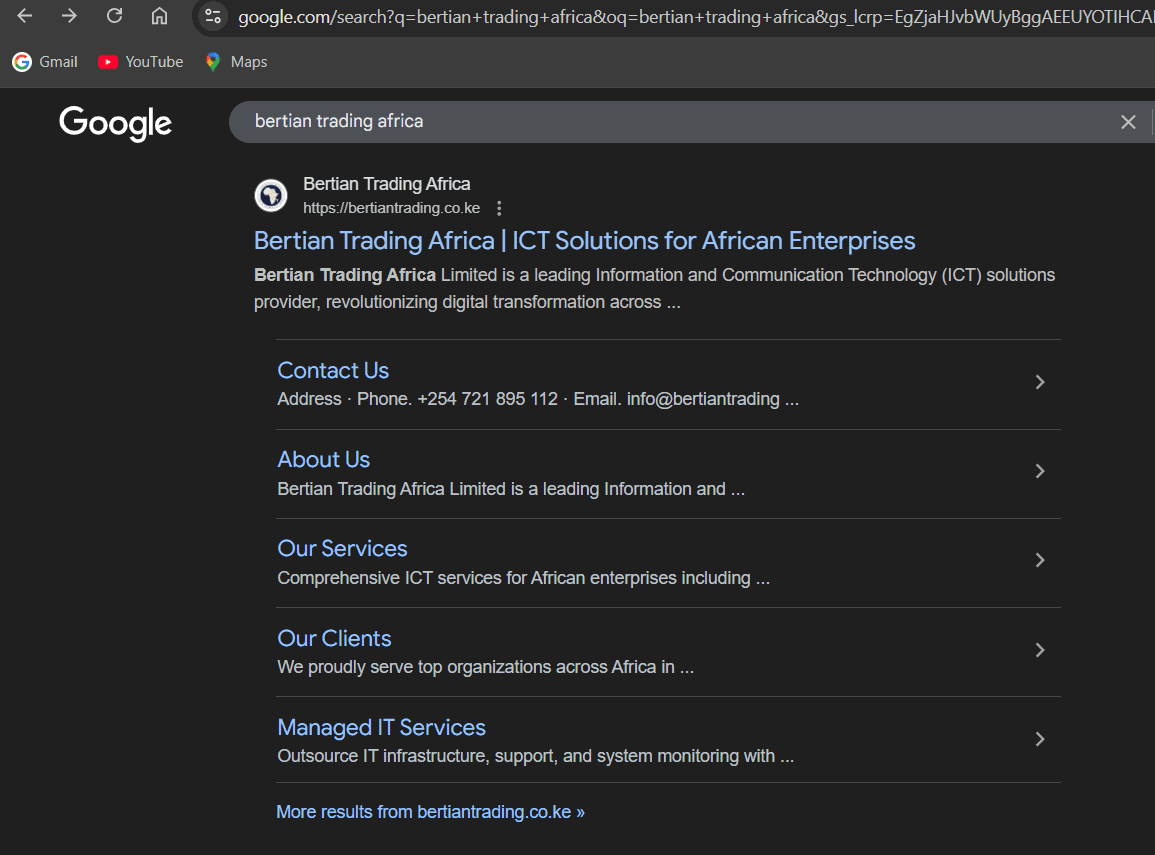
Zero-dependency #1 ranking achieved via semantic architecture.
Conclusion: Beyond "Just a Website"
This project proves that in the modern web, Technical SEO is not an add-on; it is the foundation.
By bypassing legacy CMS limitations and building on a type-safe Next.js architecture, we didn't just give Bertian Trading a website. We gave them an appreciating Digital Asset that:
- Loads instantly (100/100 Lighthouse Performance).
- Speaks Google's native language (JSON-LD).
- Converts traffic into enterprise leads.
If you are tired of websites that look good but don't rank, it's time to stop hiring designers and start hiring engineers.